
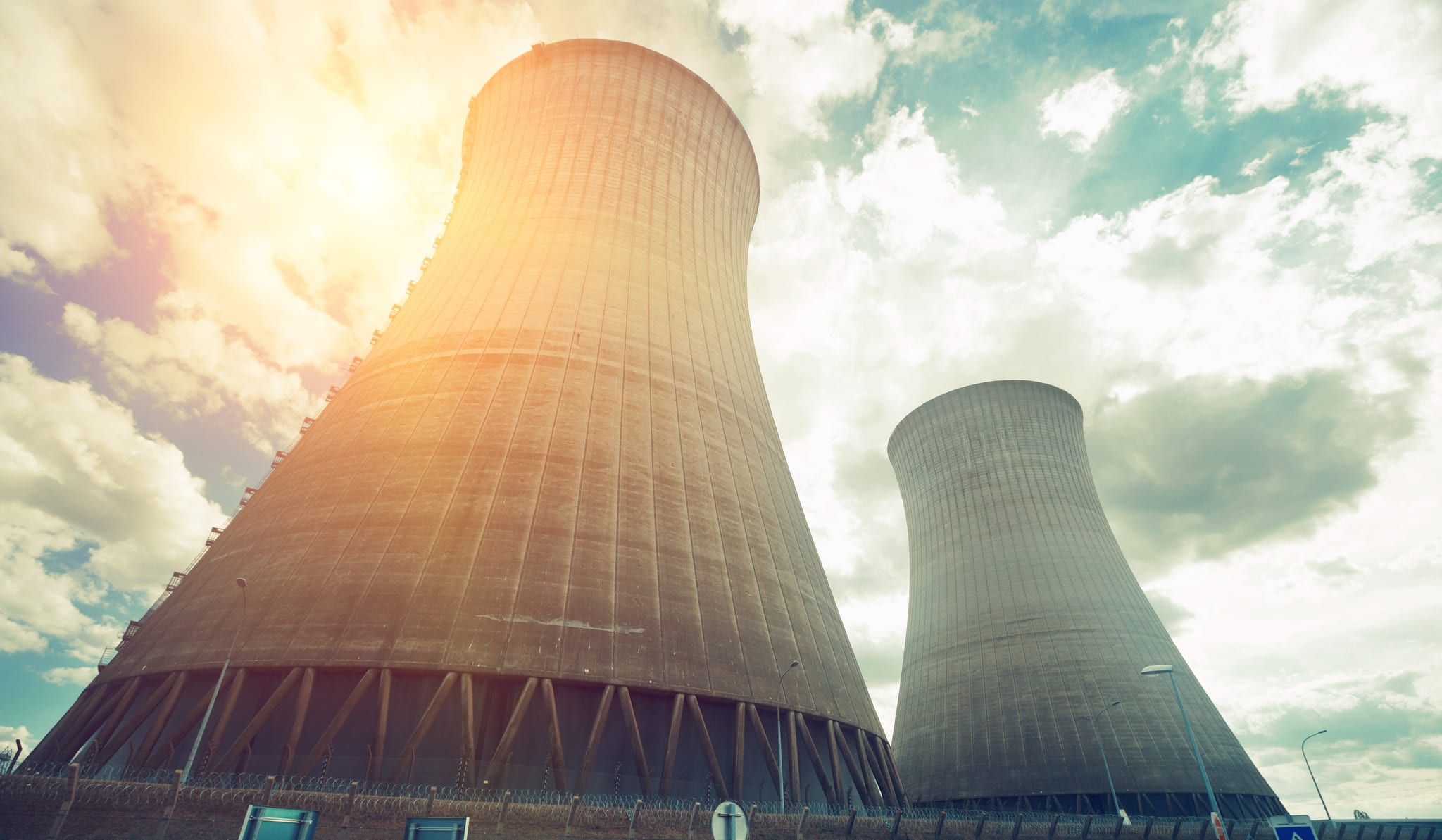
The Vernon property has been under watch ever since Vermont Yankee ceased operations in 2014.
State energy officials are again floating the idea of nuclear power in Vernon, with Public Service Commissioner Kerrick Johnson telling the Vernon Select Board on Tuesday evening that a small modular reactor could someday make sense at the former Vermont Yankee property.
The discussion centered on the advantages of the site itself. Johnson said the land remains unusually valuable because of the existing transmission equipment beside it, including switchyards and transformers owned by the Vermont Electric Company, or VELCO. That infrastructure, he said, makes the property important not only to Vernon but to Vermont and the broader New England grid.
Any return of nuclear generation would still be far off. Johnson said he sees a horizon of roughly seven or eight years before a small modular reactor might be ready for deployment. Those reactors are still under development in the United States, though one has recently been approved in Ontario and similar units are already operating in Russia and China.
Interest in the site comes as electricity use rises across Vermont and New England, with policymakers looking for ways to meet demand while moving away from fossil fuels. Johnson said affordability and climate concerns are driving renewed attention to nuclear power. He also noted that utility bills have climbed sharply in recent years and are expected to keep rising.
The Vernon property has been under watch ever since Vermont Yankee ceased operations in 2014, eliminating hundreds of jobs and a major tax contributor for the town. NorthStar Group Services, which bought the plant in 2019, is moving quickly toward finishing the $602 million demolition and cleanup. The company has also signed a lease with PowerTransitions, a Texas firm that has been meeting with residents about a possible battery storage project there.
Johnson said a modular reactor could pair well with that kind of storage facility. He added, however, that Vermont holds a right of first refusal on the site and is considering how it may want to use that option under the 2018 agreement made with Entergy Nuclear and NorthStar.
The commissioner said support for nuclear energy has grown among New England governors, pointing to a letter signed in March by all six. He also said the region now has just two operating nuclear stations left, Seabrook in New Hampshire and Millstone 2 in Connecticut, which together account for about a third of New England’s electricity.
That message drew a careful hearing from Vernon officials and residents, though the Select Board stopped short of endorsing or rejecting the idea. Members thanked Johnson for speaking directly with them.
Johnson, a former utility executive with VELCO and Central Vermont Public Service Corp., also told attendees that attitudes toward nuclear power appear to vary by age. He said younger people are more likely to see it as a low-carbon energy source, while older residents tend to remain wary.
Opposition is likely to continue, said Vernon resident Maddy Arms, a member of the Vermont Nuclear Decommissioning Citizens Advisory Panel. She said anti-nuclear activists who fought Vermont Yankee for decades are unlikely to disappear from the debate.
Political divisions over the issue were also visible Wednesday evening during a gubernatorial debate on Vermont Public. Johnson said Gov. Phil Scott has long backed nuclear power, and Scott again signaled support for keeping the option open, especially for small-scale reactors. Democratic challenger Amanda Janoo took the opposite view, citing the spent fuel still stored at the Vernon site.
There are 57 large steel and concrete casks at Vermont Yankee containing high-level radioactive waste from the plant’s 42 years of operation. That fuel will remain in Vermont until the federal government opens a permanent disposal site. A future small modular reactor would also create waste, though some designs are intended to reprocess fuel and reduce the amount left behind.
Johnson said any new project would still need local and state approval, and he stressed that Vernon would have a meaningful role in the process. He also said the state would not back a project that lacked community support.
Alongside nuclear power, state officials are examining other ways to add electricity supply, including resizing the Searsburg wind facility, exploring an offshore wind proposal from a Canadian province, and upgrading the Highgate transmission line that brings Hydro-Quebec power into Vermont.
 Brattleboro man faces stalking and threatening charges after Walgreens incident
 Animal cruelty case against East Dorset veterinarian Bob Wendell ends in dismissal
 High-earner tax debate returns as Vermont faces budget strain
 Vermont officials warn of rising fall fire danger as dry leaves pile up
 Driver sought after construction flagger struck in Londonderry


Comments
Add a comment